It’s hard to know which rescues are legitimately doing good work. I’m not only referring to outright fraud; I’m also talking about rescues that are stretched beyond their limits. I don’t mean we should stop supporting a struggling rescue, especially if it has a good solid record and is fully transparent.
Side note: Many established rescues are now finding it difficult to raise funds due to the rise of social media hucksters and the tough economic climate, which I feel is a permanent decline for the middle class (who typically supports smaller nonprofit).
Without further ado, below are red flags that indicate you should run the other way ( or donate to another organization):
1. Too good to be true?
I hope Colby’s Crew is performing miracles in terms of horse adoption rates. In several social media posts, they claim to adopt out 1-2 per day! If you follow other rescues, you would know that it’s extremely difficult to find good long term homes, especially for older and/or non-rideable horses.
I assume Colby’s Crew doesn’t adopt out until the horse is in good health and has received some training. Even so, the risk of adoption “fails” is high. Unfortunately adopters sometimes fail to honor their contract and the horse ends up at auction or worse.
The “too good to be true” also applies to mass bailouts of horses at risk of slaughter. Here’s a post with good info about the mass bail process.
2. Rescuing too many horses at once or too often
I equate this to a business that expands too quickly and opening too many stores while not having the manpower to manage the new locations.

Look at key data such as annual revenue, size of property or properties, and paid employees. If something jumps out at you, like they don’t have a large enough property for the number of residents, it is a red flag. Another tip-off is an inadequate number of staff and/or dedicated volunteers. When I was following the now-defunct Twist of Fate rescue, I noticed that their posts, photos, and videos only showed the founder and her young son (along with the animals). I wondered how she could manage that many animals on her own, and I held off on donating. It turned out she couldn’t handle the load. In 2022, dozens of starving animals and carcasses of her rescued animals were discovered by a neighboring rescue.
The Twist of Fate owner was obviously malicious but even caring rescuers can get in over their head. I have followed many well-meaning rescuers who take in new horses even when they can’t raise enough for hay and essentials. Their heart may be the right place but most likely they won’t be able to adequately support their residents for long.
3. Ratio of rescue residents to employees / volunteers doesn’t add up
This is similar to red flag #2 but I want to call special attention to it. Some rescuers may not be good at acknowledging their employees and volunteers, but if you follow a rescue long enough, you will get a feel for other staff members and/or regular volunteers.
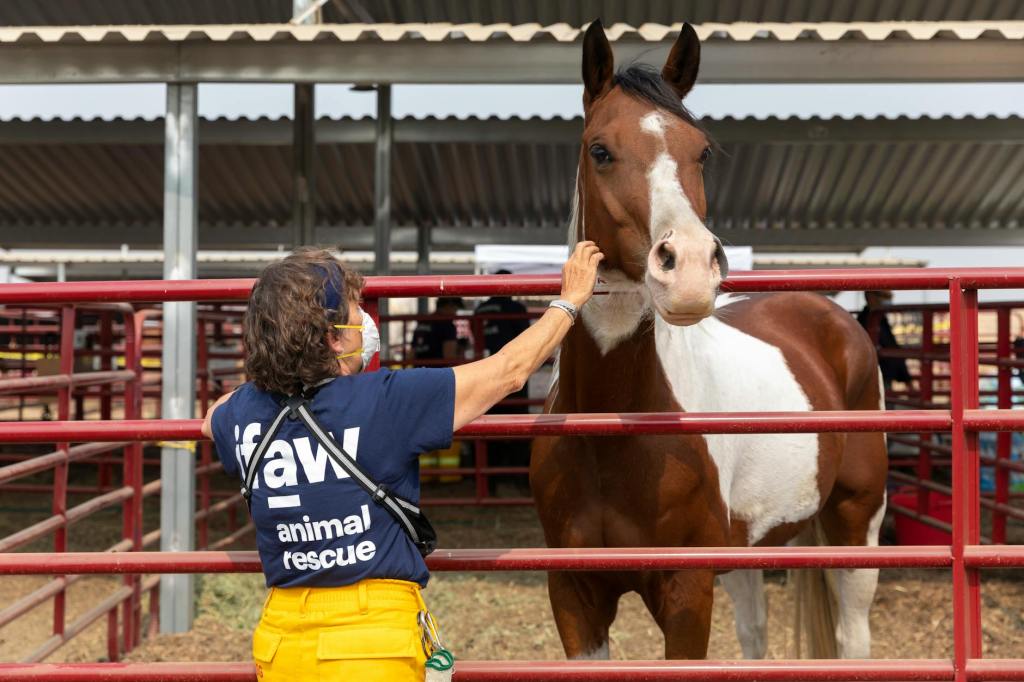
Even smaller rescues need outside help if they have many residents, especially those with special needs. I wish I knew the magic number, i.e. the ideal ratio is 1 person for every 8 horses, but I don’t know and have never owned a horse.
For what it’s worth, here are some resources.
Animal shelter staffs to animal ratio
“Average daily staff time required for intake = Minutes per intake x average Monthly Daily Intake #
If a shelter is taking in 5 dogs per day on average, and each intake takes 15 minutes, the required staff time would be: 15 minutes x 5 dogs/day = 75 minutes per day“
As you can see just from the above excerpt, figuring out the ideal employee to animal ratio can get very, very complicated.
Teacher to student ratio – plus examples for special needs education in California:
1:8 teacher to special needs children with high demands
1:12 teacher to special needs children with mild needs
4. Just plain bad business decisions
I follow a rescue that seems to be on the brink of folding. Their property lacks water, hauling water is a continual hardship, and they struggle to raise money for hay. They even had to place several of their own horses in foster homes.
Soon after the founder posted about sending animals away, the rescue was profiled in a local paper AND they were soliciting funds to put a down payment on another property (!). No mention was made of their ongoing fundraising struggles. The timeline to raise the funds was woefully short — maybe a week? Kind souls donated $10,000 total — not enough to buy the property they wanted, which is now being kept in an account for a future purchase. I’m not saying that she will use the funds for other purposes, but if you’re struggling to make ends meet, buying a property is NOT a smart move.
Did I miss any common red flags? Share in the comments!
 No Horse Left Behind
Leave a comment