This post reflects my own personal experience and unique quirks. However, I think some things on this list can help animal rescues increase their longevity and fundraising success.
#1 We need transparency
The horse and animal rescue world has been rocked by numerous scandals over the years — “Rescues” that end up neglecting or even killing the animals they “saved” with donor funds. Rescues that raise thousands of dollars by creating fake emergencies and drama. We need $3,000 by tomorrow or this horse ships to Mexico!
It’s not surprising that seasoned donors are more careful than ever about sending funds to rescues of all sizes. If your rescue is more than two years old and/or have revenue of at least $50,000, it is critical that you get third-party recognition or rating from Guidestar and/or Charity Navigator. Since it may take time to get rated by Charity Navigator, it is important that you make your tax forms available to the public. Red Feather Equine Sanctuary is a good example. As of this writing, they are not rated on Charity Navigator. However this doesn’t prevent them from making their tax returns available. The more donors know, the more confident they’ll feel about donating to your organization.
#2 Acknowledge us
Most supporters know that rescuers are too busy and often too understaffed to send thank you notes for every donation. However, a little thanks can go a long way as you will see from my story.
One day, as I was scrolling through my Instagram feed made up mostly of horse rescues, I heard Jennifer Glassman of 3rd Coast Sanctuary thanking me for sending a few inexpensive items from their Amazon wishlist. Even though I’m not donating for an ego boost, it felt nice to be acknowledged. Most importantly, this made 3rd Coast Sanctuary stand out in my mind from other rescues. I started paying more attention to their posts and subsequently, joined their Patreon and now donate to them on a regular basis.
#3 Tell us a story (again and again)
When posting about a horse (or horses), rescuers often skip the background story. I get it. You know that the majority of your readers are regular followers. They don’t need to hear the same story, right? However, you need to think about people who have just discovered your organization and donors with very bad memories(!) For people like me who follow many, many rescues, it is impossible to remember all the horses. I appreciate rescuers like Clare Staples of Skydog Sanctuary who tags each of their horses AND repeats a horse’s history in many of her posts.

The bottom line: When donors feel like they know and love an individual horse, they are more likely to commit to a sponsorship.
4) You need a professional-looking website
I am always surprised when I come across a rescue that is active on social media but don’t have a website, or a very outdated one.
Tik Tok or Instagram may be where you get the most traffic and donations but your website is an important part of your brand. On your site, you can better control your narrative, provide more substance and not worry about changing social media algorithms.
A good website is an important central source of information for potential donors. Here, you can share your rescue’s mission, spotlight horses for sponsorship, give donors a better idea of the cost of running a rescue, and highlight your accomplishments.
#5 Design matters
When I wrote #5, I was thinking about logos and t-shirts ( of which I own way too many). For me, the design makes the difference between buying a shirt or not. See some recommendations here, here and here.
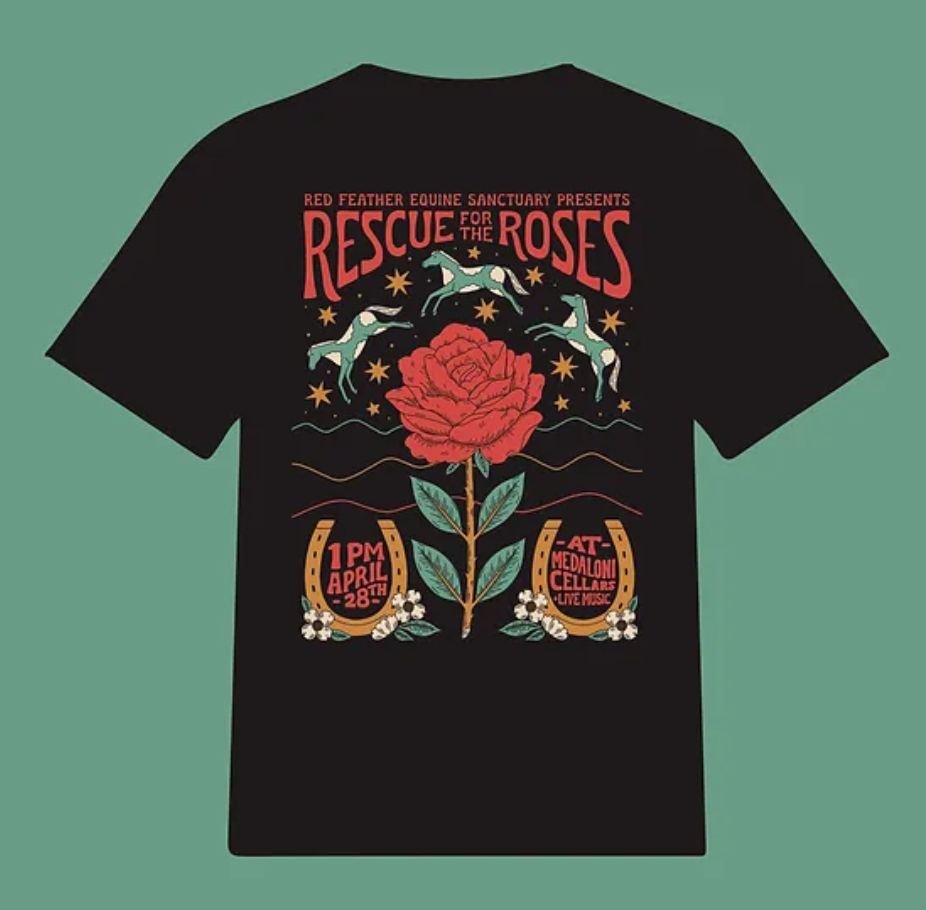
Reminds me of my old Guns n’ Roses t-shirt. From Red Feather Equine Sanctuary.
Then I realized design is even more crucial when it comes to the look and feel of your website.
Please make it easy to navigate and easy to donate and sponsor a horse!
I don’t want to figure out which horse to sponsor. Each horse should have its own page with a picture or two (before and after), background story and a donate button. I realize forms can get tricky but please try to make it as simple as possible.
For sponsorship levels, it helps if you also break down costs as in $100 level=1 week of hay, $25=one farrier visit and so on.
I would also appreciate it if everyone had a transparency page or at least mention it.
So that’s my top five. If I missed anything important to you as a donor, please let me know!
 No Horse Left Behind
Leave a comment